
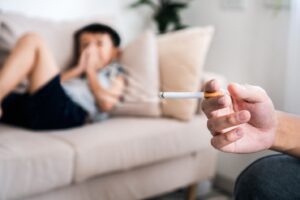
Sleep apnea is often associated with adults, but children can experience this sleep-related breathing disorder, too. When a child has sleep apnea, their breathing repeatedly becomes restricted or stops during sleep. While several factors can contribute to childhood sleep apnea, parents may be unaware that their smoking could play a role. Research has found an association between exposure to tobacco smoke and an increased risk of sleep-disordered breathing in children.
How Can Secondhand Smoke Affect a Child’s Airway?
Secondhand smoke contains numerous chemicals that can irritate the nose, throat, and airways. Repeated exposure may contribute to inflammation and swelling of the tissues lining the respiratory tract.
For a child who already has factors that narrow the upper airway, additional irritation and inflammation could potentially make nighttime breathing more difficult. However, secondhand smoke is not considered the only or sole cause of childhood sleep apnea.
Other Factors Can Contribute to Childhood Sleep Apnea
Obstructive sleep apnea is the most common type of sleep apnea in children. It occurs when the upper airway becomes partially or completely blocked during sleep.
Enlarged tonsils or adenoids are common contributors. Other factors can include facial or jaw structure, nasal congestion, certain neuromuscular conditions, and excess weight. Some children may also be at greater risk because of underlying medical or genetic conditions.
Because there can be several potential causes, a child who shows signs of sleep apnea should be evaluated by an appropriate healthcare professional.
What Signs Should Parents Watch For?
Children don’t always show the same symptoms as adults. Loud or frequent snoring is one possible warning sign, but sleep apnea can occur without obvious snoring.
Parents may notice pauses in breathing, gasping, restless sleep, mouth breathing, unusual sleeping positions, or frequent nighttime waking. During the day, a child may experience difficulty concentrating, behavioral changes, irritability, or excessive sleepiness.
These symptoms can have many possible explanations, so they don’t necessarily mean a child has sleep apnea. However, persistent concerns are worth discussing with a pediatrician or qualified sleep professional.
Creating a Smoke-Free Environment
Reducing a child’s exposure to secondhand smoke is an important step toward protecting their respiratory and overall health. Smoking outside may reduce indoor exposure, but smoke and its residue can still be carried indoors on clothing and other surfaces.
The safest approach is to maintain a completely smoke-free environment around children.
If your child has persistent snoring, unusual breathing during sleep, or other symptoms that concern you, talk with their doctor. A professional evaluation can determine whether sleep apnea or another sleep-related breathing problem may be involved. They may refer you and your child to a sleep specialist for appropriate treatment.
Secondhand smoke exposure may be associated with an increased risk of sleep-disordered breathing, but it is only one factor among many that can affect a child’s airway during sleep. Recognizing symptoms early and reducing environmental risk factors can help support healthier sleep. If you suspect your child may have sleep apnea, seek professional guidance rather than assuming the symptoms will resolve on their own.
About the Practice
Drs. Pamela West and Stephanie Gorczyca at iSleepSolutions in Las Vegas are trained specialists in sleep disorders such as sleep apnea. If you’re experiencing constant daytime exhaustion or find yourself gasping or choking in your sleep, we welcome you to our office for an evaluation and appropriate treatment. Book your appointment online or by phone at (702) 844-6226.