

When you’re suffering from a TMD (temporomandibular joint disorder), the chronic pain in your jaw is the symptom that you’re most likely to notice. But a problem with your jaw joints could also contribute to a number of other issues – including, surprisingly enough, sleep apnea. What is the relationship between TMD and sleep? And what can you do to relieve your pain and get a good night’s rest again? The following post has the answers.
(more…) If you live with frequent jaw pain, simple tasks can be difficult, like chewing, yawning, or opening your mouth to take a big bite of a juicy hamburger. A temporomandibular joint disorder (TMJ) can significantly affect your quality of life. However, you might be surprised to learn that it can also affect your sleep. With 44 million Americans having a variant of a
  Is it difficult to open your mouth from stiffness or pain? Maybe your jaw clicks or pops when you move it? You might have a temporomandibular disorder (TMD). Your temporomandibular joints (TMJ) are located on either side of your face, connecting your jaw to your skull. If the joints function incorrectly, your jaw can be stiff or tender. Simple tasks, like chewing or yawning, can be difficult or painful. Don’t worry, here are the solutions you need to
  Sleep apnea is a condition that causes frequent breathing disturbances while sleeping. Every time you stop breathing, your body is depleted of oxygen, increasing your risk of various health issues, like heart attacks and strokes. Not to mention, it can affect your quality of life drastically, leading to sleep deprivation, depression, and more. Anyone can develop sleep apnea, but there are several risk factors, like obesity or a large neck circumference. However, researchers have found another link. Genetics can play a role in your risk of sleep apnea, and here’s how.
 If you have
  Sleep apnea is a common disorder that results in frequent disruptions in breathing when sleeping. Although there are 3 types, most people have obstructive sleep apnea (OSA). The breathing interruptions are caused by a blockage in the upper airway from the soft tissues in the back of the mouth or tongue collapsing. Although anyone can have the disorder, there are known risk factors, like obesity. Not only can excess body fat increase your odds of having the disorder, but sleep apnea can also lead to weight gain. You don’t need to toss and turn at night worrying about your health. Here’s how a healthy weight and sleep apnea treatment can help you sleep soundly.
 Few people spend much time thinking about their temporomandibular joints (TMJ), but if you deal with persistent jaw pain, yawning, speaking, or chewing might make you pause. The joints connecting your lower jaw to your skull on either side of your face allow you to open and close your mouth and move it from side to side. Unfortunately, these simple movements can be painful and limited if you have a TMJ disorder. Various factors can worsen your symptoms, but is chewing gum on the list? Here’s what you need to know before reaching for another piece.
 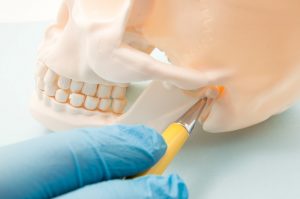 Your temporomandibular joint (TMJ) is located on either side of your face. It connects your jaw to your skull, allowing you to speak, eat, and even yawn. Most people don’t spend much time thinking about their TMJ; however, if you have a disorder that affects the joint, it can influence your quality of life. Whether you have daily facial pain, difficulty opening your mouth, or headaches, here are 5 habits to break to reduce your TMJ disorder symptoms.
  If you have sleep apnea, you’re not alone. About 30 million Americans have the disorder; however, only 6 million people have been diagnosed. It’s a common misconception that chronic snoring is the only concern, but sleep apnea can have potentially life-threatening complications. Disruptions in breathing can occur hundreds of times each night, depleting your body of oxygen. Unfortunately, sleep apnea won’t go away on its own, but you can take 3 steps at home to improve your symptoms when combined with the right treatment.